
NFC vs Paper Card vs QR: What to Choose in 2026
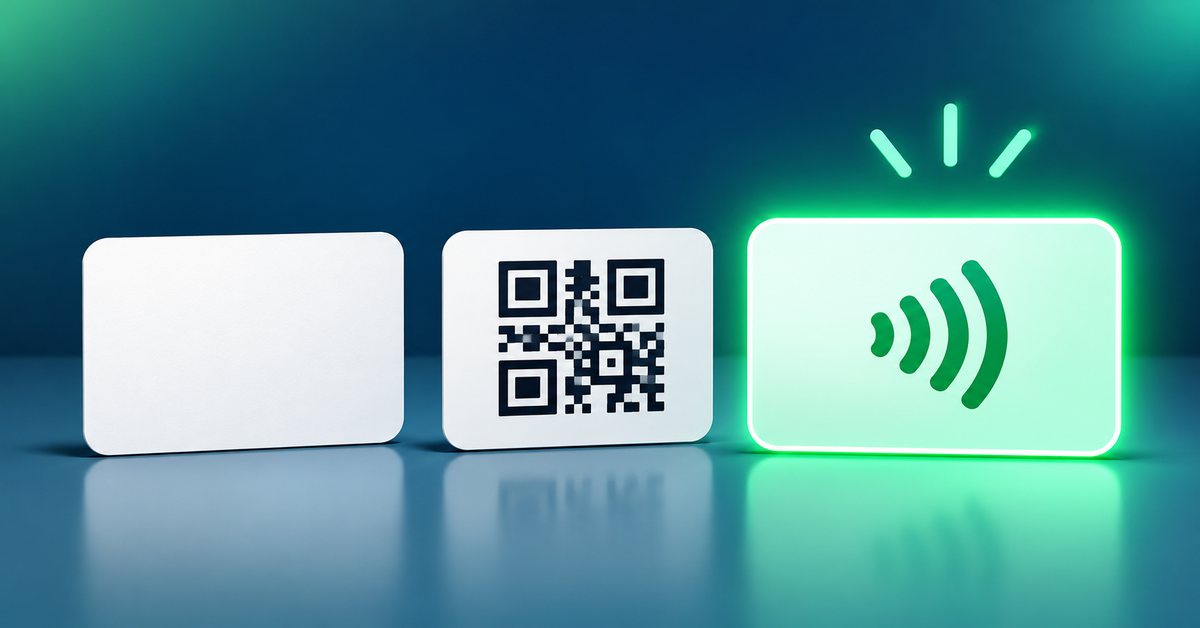
Every few weeks a shop owner, consultant or freelancer asks the same question: should I keep printing paper cards, add a QR code, or switch to an NFC card? The honest answer is that each one solves a different problem. This guide compares them on the things that matter in daily business, so you can pick without guesswork.
What each option actually is
A paper card is printed information: your name, number and maybe an address. It works without any technology, but it is fixed the day it is printed.
A QR code is a square pattern that a phone camera reads and turns into a link. It can sit on paper, a poster, a shop glass or a bill. The phone needs a camera and the person needs to open it.
An NFC card holds a tiny chip with a web link. Hold a modern phone near it and the link opens. The link usually points to a digital business card page that you can edit any time.
Cost over a year
Paper cards look cheap per piece, but you reprint every time a number, designation or address changes. A box of 500 often outlives your details. QR codes are nearly free to create, and a QR sticker costs very little to print. An NFC card costs more at the start than one paper card, but one card can last for years and the page it opens stays editable at no printing cost.
If your details change rarely and you hand out hundreds of cards at events, paper is still reasonable. If you change shops, phone numbers or services, editable beats printed.
Speed at the moment of meeting
Paper needs the other person to type your number or photograph the card. A QR code needs them to open the camera, aim and tap the link. NFC needs a single tap on the back of the phone. In a noisy trade fair or a quick shop counter conversation, fewer steps means fewer people who give up.
Keeping information fresh
This is where paper loses most clearly. If you move your clinic or add a WhatsApp number, every paper card in someone's wallet is wrong. A QR code or NFC link that points to an online page can always show the latest details. Both stay correct as long as you update the page behind them.
Reach across phones
Paper works for everyone. QR works on nearly every smartphone with a camera. NFC works on most modern phones, but a few older or budget models do not support it, and on some phones NFC has to be switched on. For this reason a good NFC card should also carry a QR code or a short link as a backup. Our guide on how ordering works explains how a card is set up, and the phone guide in this series covers compatibility in detail.
What people remember
A paper card is physical and can be written on. An NFC card feels new and often starts a conversation, especially in sectors where first impressions matter, such as interior design, real estate, photography and consulting. A QR code alone is functional but easy to forget.
Tracking what works
Paper gives you no information on who looked at it. A digital page behind a QR code or NFC card can show you how many times it was opened, which is useful when you hand cards out at several places and want to see which one brings visitors. Analytics options depend on your plan, which you can check on the pricing page.
A simple way to decide
- You attend events and meet many people daily: NFC card plus a small QR code on the same card.
- You run a shop or clinic with walk-in customers: a QR code on the counter or a standee for reviews and contact, plus an NFC card for yourself.
- You mostly share your details online: a digital card link is enough, and you can add NFC later.
- You work in a traditional trade where people expect paper: keep a short run of paper cards and add one NFC card for tech-friendly clients.
For most small businesses the best answer is a mix, not a replacement. The NFC card is your fast, always-correct card. The QR code is your backup and your counter display. Paper is for the people who want something to hold.
Getting started
If you want to try the NFC route, browse the options in the Sharevo shop. Our designer will work on the design with you before anything is printed, and the digital card behind it runs on a plan that you can compare on the pricing page.
FAQ
Is an NFC card better than a QR code? Neither is better in every case. NFC is faster for a person standing next to you, while a QR code can be shown on a screen, poster or counter. Many cards include both.
Can I stop using paper cards completely? You can, if your customers are comfortable with phones. Many owners keep a few paper cards for older clients.
What if the other person's phone does not support NFC? They can scan the QR code on the card or type the short link, so you never lose the contact.
Do I need to reprint the card if my number changes? No. The card holds a link, so you edit the digital page and the same card shows the new number.